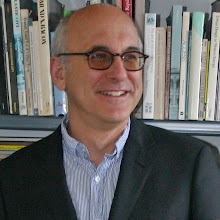
Christopher Hawthorne has a point to make when he states in his December 30, 2010 review of planning in Los Angeles that, "...the extra-large deals always seem to get hammered out...while a more thoughtful, forward-looking and comprehensive brand of planning continues to lag behind, underfunded and undervalued." He is also not wrong to note in this article about the proposed AEG stadium next to Staples Center in Downtown Los Angeles that much of this city is planned one project at a time. As a result, it is difficult to often understand how the pieces add up to a larger urban whole.
But I am not so sure, as Hawthorne states, that there has been a "lack of strong and coherent planning creating a vacuum into which powerful individuals - developers, moguls, patrons and even architects - have rushed". Rather, I would argue that there has been a surfeit of political leadership in Los Angeles that has too consistently chosen to ignore, over ride, not be aware of, not be serious about, and/or contravene a plethora of plans and urban design concepts, some very good.
There are many plans in Los Angeles that the public as a whole is mostly unaware of; the Westwood Specific Plan, the Park Mile Specific Plan, the Downtown Urban Design Guidelines, the Ventura Boulevard Specific Plan, the Playa Vista Master Plan, to name just five. Each was done utilizing large amounts of public input over long durations of time, and each, even accounting for sometimes inappropriate variances allowed by City officials, has managed to establish a modicum of place that marks each of these areas as distinct.
There is also in Los Angeles constant tweaking of the zoning code that directly impacts the shape of this City. In recent years there have been major debates about signage, hillside housing, and mixed-use accessory zones. At present there are major debates about adult residential care facilities and their impact on single family neighborhoods. A bit over a decade ago the City adopted a new General Plan Framework that directed growth to boulevards. Ten years before that Zev Yaroslovsky sponsored a referendum that reduced density along these same corridors. In the past three decades Metro and its predecessors have planned and implemented 80 miles of rail transit and the largest bus rapid transit program in the country. The 30/10 effort promises to greatly add to these planned mass transit totals.
Within the region there is also no lack of planning and urban design to both talk about and possibly review. The City of Pasadena and Santa Monica are both considered to be national models of planning innovation and have implemented many strong, innovative, and demanding plans. The recently adopted Land Use and Circulation Element in Santa Monica, not without controversy, is one of the most design-oriented and detailed general plans ever adopted in the State of California. Pasadena's Civic Center Specific Plan went through years of public debate and reinforces and builds upon the success of Old Town Pasadena, again a planned effort. This same City adopted the City of Gardens standards, three times. More recently, the City of Santa Ana adopted one of the most ambitious form-based zoning ordinances in the country.
Ironically considering the point of Hawthorne's Times piece, a lot of developers think that Los Angeles, and the smaller cities that surround it, are chock full of plans and overlapping regulations that both shape their projects to too great a degree and at the same time choke them. The truth of the situation is probably somewhere in between my overly enthusiastic belief in the efficacy and impact of the planning that is being done and Hawthorne's sense that Los Angeles never passed a plan soon enough.
Given just how much planning and urban design work is out there, I do wish that newspapers like the Los Angeles Times covered it to a greater degree. In fact, I think that Christopher Hawthorne should cover it to a greater degree. By covering it I mean really digging into the ideas that are being generated, critiquing the numerous draft guidelines and documents while they are before the public, celebrating the codes that win prizes, and most important, calling out as mediocre the planning and urban design stuff that just doesn't cut it.
Perhaps this is not Hawthorne's job. He is, after all, the architecture critic of the Los Angeles Times, not the planning and urban design critic. Still, he has to his credit steadily related the state of planning Los Angeles to the state of its urbanism and its architecture. At this point it is time to go one step further and concentrate to a greater degree on the specificity and details of the plans and codes that are being produced, put them in their proper place, and define more often the nexus between them and the architecture and environments that result. It is even more vital to describe when the planning and the architecture are at variance with the plans and why this is ok, or not.
Contrary to opinion, Los Angeles and the region are flooded with plans, some good, some not, and it is time the plans, the urban design concepts, and the citizens, leaders, and indeed planners and designers behind these plans get more exposure, and as necessary more grief, for the work that is actually being undertaken everyday.


AIA|LA UDC Presents...Building Bike-Culture in Los Angeles :: Wednesday,
June 19 (6:30 - 8:30pm)
-
*AIA|LA Urban Design Committee Presents...*
*Building Bike-Culture in Los Angeles*
Wednesday, June 19 (6:30pm - 8:30pm)
AIA Los Angeles
3780 Wilshire Blvd., ...
13 years ago